Posts

Showing posts with the label acoustic reflectors

Why soundproofing truly matters
Image
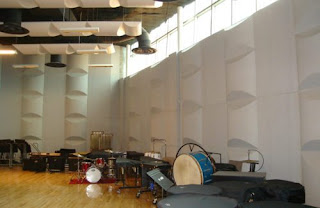
There is a wide range of different ways that you can use when you are soundproofing a room with kinetics noise control . There are also different avenues that you can use to ensure that this job is completed just like the way you want it to be. Speaking of walls of the room at the place you are working, you can use a sound barrier wall . Though most types of insulation will offer you at least some barriers against noise, there are insulation products that are particularly made to do this also. This product type works best for new homes as it can conveniently be installed at the time of the home being manufactured. If the room that you are soundproofing is your existing house, you may not want to incur the cost of having to purchase special type of insulation or acoustic reflectors.  Rather, you may look for other and less labor intensive and costly options. These include purchasing blinds and drapes for any of the windows that are located on that specific wall. As these windows wil...
Selecting acoustic treatment for your home theatre

Image
For the home theatre lover, there are various types of acoustic treatments that you can use to create an excellent sounding acoustic environment. Not only are you restricted to thousand dollar products that are being used in the world’s top notch studios and home theaters, you can also use less costly cones available online and also make DIY solutions or use acoustic reflectors . Types of acoustic treatment There are three types of acoustic soundproofing services that you can use in the treatment of your home theater, reflectors, diffusers and absorbers. Reflectors are surfaces that permit sound to bounce of it relatively untouched. Absorbers are materials that trap sound, which are beneficial in creating a dead sounding space. Diffusers are surfaces that serve to deploy sound in an assortment of directions according to its surface pattern. Selecting what sound treatment to use in your home theater Your home theater may be located in the living room, your den, or even in your own bedr...

What is the difference between absorption and a barrier material?

Image
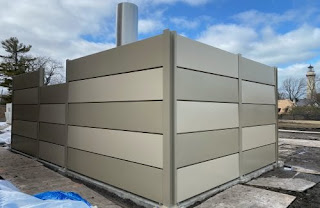
Speaking of soundproofing, both absorption and barrier materials are quite vital. Absorption materials are usually light in weight and porous. They do precisely what they claim and that is absorbing the sound waves. They permit sound waves to enter the structure and break up the energy so that they don’t escape the room. With kinetics noise control ,   the goal is to absorb the sound as much possible, and to transmit the remaining energy away from the location concerned.   The materials of a sound barrier wall will generally reflect the sound back into the room instead of absorbing it. They are made from dense, non-porous materials like steel, concrete or gypsum board. Barriers are frequently used where there are homes near busy main roads or railway lines.   As a thumb rule, materials that are good acoustic reflectors are not good sound barriers, and vice versa. It is common to notice a barrier wall with a layer of absorbing material laid on the top for the best o...